My Tenure as a Stucco Nerd

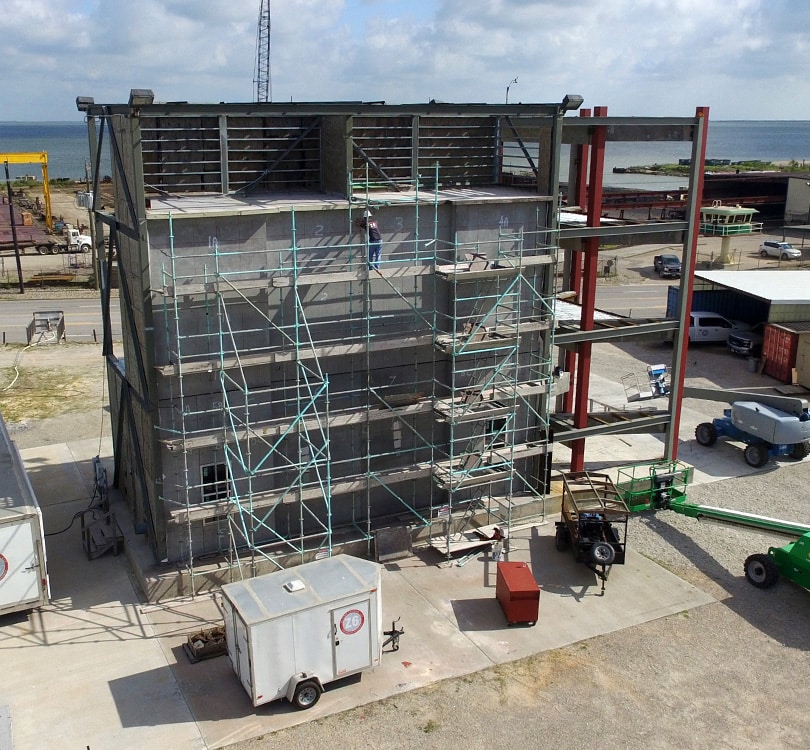
Hanging around with Tim Rogan (Houston Lath and Plaster) and Chad Dupree (Diversified Plastering) the last couple of years has definitely increased my awareness with regard to the more technical aspects of lath and stucco. I consider myself a pretty well-rounded envelope fellow, but these two are more along the lines of stucco specialist; I believe we use to call them craftsmen, but today, they are commonly called nerds. As many of you may or may not know, our three firms set out to build a large-scale mock-up at our facility in Galveston about a year and a half ago to determine if cutting lath at control joints really reduced cracking. Apparently, the Architect/Engineer side thinks cutting the lath is better and the contractor crowd thinks running the lath through is better. I really don’t care – I just like testing big mockups. That is not to say that my testing circus does not come with opinions and over the length of this process, I have developed some really strong opinions on stucco installations.

First of all, the cracking that we saw was no more prominent from the cut lath side of the mock to the side that ran through (in fact many of our cracks startedin the middle). If it does not make a difference, why would you cut it? I would rather have a continuous lath serving as a structural diaphragm than a quilt of cement squares hanging over my head
Secondly, along with the lath cutting comes the securement of the edges of the lath which comes complete with hundreds, if not thousands, of holes through the water-resistive barrier (WRB). Now we are back on my home turf! We need to minimize holes through the WRB, especially if we are going to continue to sheath with oriented strand board (OSB) to minimize pesky (litigious) water infiltration issues.
Lastly, (and this has nothing to do with cutting the lath), I do not agree with the International Building Code (IBC) that the stucco system should be designed to minimize water behind the stucco system (modern-day drainage planes can handle the water). Typically, when you limit water in, you limit water out. We see much more damage (i.e. cracks) related to water trapped behind stucco than  cracks related to any other distinguishable source; we also see a lot of trapped water when our core stucco systems for forensic purposes. So, what does that have to do with lath? It is my opinion that we need more room behind the stucco (than self-furring lath provides) to facilitate the complete evacuation of water that will get behind the stucco system. The movement of air and water behind the lath will prevent premature degradation of building materials, specifically stucco systems and the WRB (WRB’S are not made to stay wet, i.e. they are not waterproofing) due to continuous exposure to water and may help reduce cracking since the lath would not be pulled tight across the sheathing.